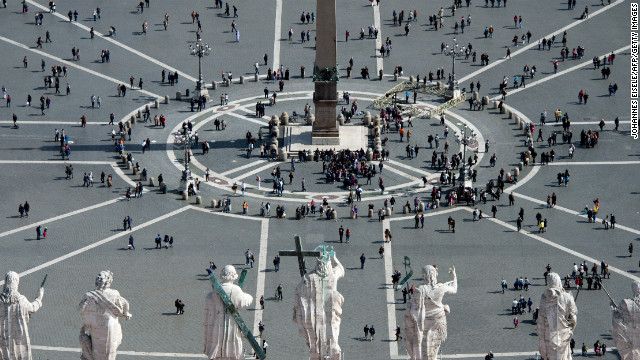
The work to elect a successor to retired Pope Benedict XVI begins in earnest
Tuesday, when the cardinals charged with the task gather in Vatican City for
the papal conclave.
Just a few hours after moving into Santa Marta, their residence at
the Vatican for the duration of the process, the cardinals entered a morning
Mass at St. Peter's Basilica.
The service -- open to the public -- is the last public event
featuring the 115 cardinals who will choose the new spiritual leader of the
world's 1.2 billion Roman Catholics.
They processed ceremonially into St. Peter's, dressed in scarlet
robes, for a service in which they prayed for guidance in choosing the next
pontiff.
Members of the public waited in long lines Tuesday morning to get into the
Mass, which was open to the public. As the service began, the morning's
brilliant sunshine came to an abrupt end, with the skies letting loose a
torrential downpour.
Applause echoed round St. Peter's as Cardinal Angelo Sodano, dean
of the College of Cardinals, offered thanks for the "brilliant
pontificate" of Benedict XVI, whose shock resignation precipitated the
selection of a new pope.
Sodano's homily focused on a message of love and unity, calling on
all to cooperate with the new pontiff in the service of the church.
"My brothers, let us pray that the Lord will grant us a
Pontiff who will embrace this noble mission with a generous heart," he
concluded.
In the afternoon, the cardinal-electors -- those aged under 80 who
are eligible to vote - will go to the Pauline Chapel for further prayers.
They will then walk to the Sistine Chapel, chanting prayers as
they go, to begin the secret election called the conclave.
The doors will be locked behind them and, after that, the only
clue the world will have of what is happening inside will be periodic puffs of
smoke from a copper chimney installed over the weekend in the Sistine Chapel.
Black smoke, no pope. White smoke, success.
Rome is abuzz
Rome was abuzz Monday with preparations for the conclave, from the
5,600 journalists the Vatican said had been accredited to cover the event to
the red curtains unfurled from the central balcony at St. Peter's, the spot
where the world will meet the new pope once he is elected.
Tailors have also completed sets of clothes for the new pope to
wear as soon as he is elected, in three different sizes.
Video released by the Vatican over the weekend showed the
installation of a pair of stoves inside the chapel. One is used to burn the
cardinals' ballots after they are cast and the other to send up the smoke
signal -- the one that alerts the world that a vote has been taken and whether
there's a new pope.
An electronic shield has been put in place to stop the
cardinal-electors communicating with the outside world using mobile phones or
other devices.
Cardinal Roger Mahony, the retired Archbishop of Los Angeles,
tweeted early Tuesday: "Last tweet before moving to Casa Santa Martha, and
Mass to Elect a Pope. First Conclave meeting late Tuesday afternoon. Prayers
needed."
The cardinals will probably vote Tuesday, but they don't have to,
Vatican spokesman the Rev. Federico Lombardi said Monday.
If they do, it's likely the first smoke might be seen around 8
p.m. (3 p.m. ET), he said.
When cardinals elected Benedict in 2005, the white smoke signaling
the decision came about six hours after an earlier, inconclusive vote, he said.
It took another 50 minutes for Benedict to dress, pray and finally
appear on the balcony of St. Peter's, he said.
The longest conclave held since the turn of the 20th century
lasted five days.
On Monday, cardinals held the last of several days of meetings,
known as General Congregations, to discuss church affairs and get acquainted.
Lombardi said 152 cardinals were on hand for the final meeting.
Church rules prevent cardinals over the age of 80 from
participating in the conclave but allow them to attend the meetings that
precede the vote.
Who will win?
Meanwhile, the Italian press is full of speculation about which
cardinal may win enough support from his counterparts to be elected, and what
regional alliances are being formed.
"Many would say it's all about politics at this point," but I think it's important to remember that
they also recognize that this is a very spiritual moment. Once the doors
close and conclave begins, he says it's less about politicking and "more
about prayer as they each in silence write their votes."
Italy potentially wields the most power with 28 of the 115 votes,
making it the largest bloc in the College of Cardinals. The United States is
second with 11. Altogether 48 countries are represented among the cardinal-
electors.
Sixty-seven of their number were appointed by Benedict, who
stepped down at the end of last month, becoming the first pontiff to do so in
six centuries.

No comments:
Post a Comment